Article: Scooter Safety for Kids: Helmets, Being Seen and a Parent's Checklist
Scooter Safety for Kids: Helmets, Being Seen and a Parent's Checklist
For lots of children, the scooter is how they get to school, the park and the shops, and at this time of year the journey home is getting darker. Road Safety Week runs from 15 to 21 November, and this year Brake's theme is "Safe people on the move", so it feels like a good time for a quick check.
Here's our simple guide to scooter safety for kids aged 2 to 8: how to fit a child's helmet properly, how to help them be seen, what to do at the kerb, and which kids' scooter and helmet suit which age. The tips come from the Highway Code and RoSPA, and each one takes a minute or less.
The short version
- Helmet: it should sit level, one or two fingers above the eyebrows, with the straps in a V under each ear.
- Be seen: something bright by day and something reflective after dark. A helmet with a rear light helps too.
- At the kerb: scooters stop, hands are held, and you walk on the traffic side.
Do kids need a helmet for a scooter?
There's no law in the UK that says children have to wear a helmet on a scooter, a balance bike or a bike. The Highway Code (Rule 59) does say cyclists should wear a helmet that meets current safety standards, is the right size and is securely fastened, and RoSPA's advice is the same. We'd always pop one on anyway. Most kids' scooter helmets work for balance bikes and bikes too, so one good helmet does the lot.
The trick is a helmet they actually like. Let them choose the colour or print, and it's far more likely to go on without a fuss.
How to fit a child's helmet in one minute
These steps are from RoSPA's cycle helmet advice. Try them together in front of a mirror, so they start learning to do it themselves.
- Measure their head. Wrap a soft tape measure around their head, one or two finger widths above the eyebrows. That number tells you which size to buy.
- Sit it level. It shouldn't tip back and show their whole forehead, or slip forward over their eyes. Aim for one or two finger widths above the eyebrows.
- Tighten the dial. Turn the dial at the back until it's snug but comfortable. When they shake their head, the helmet should stay put.
- Make a V. The side straps should meet in a V just under each earlobe and lie flat.
- Check the chin strap. You should only fit one or two fingers under it. If they open their mouth wide, they should feel the helmet pull down a little.
When to replace a kids' helmet
RoSPA suggests checking a helmet over now and then. Replace it if your child has crashed in it, if it's been dropped hard enough to crack the foam, or if you spot cracks, worn straps or a broken buckle.
Heads grow fast too, so check the fit each term. If you can't get it level and snug any more, it's time for the next size up. We'd steer clear of second-hand helmets, as you can't know what they've been through.
Our favourite kids' scooter helmets
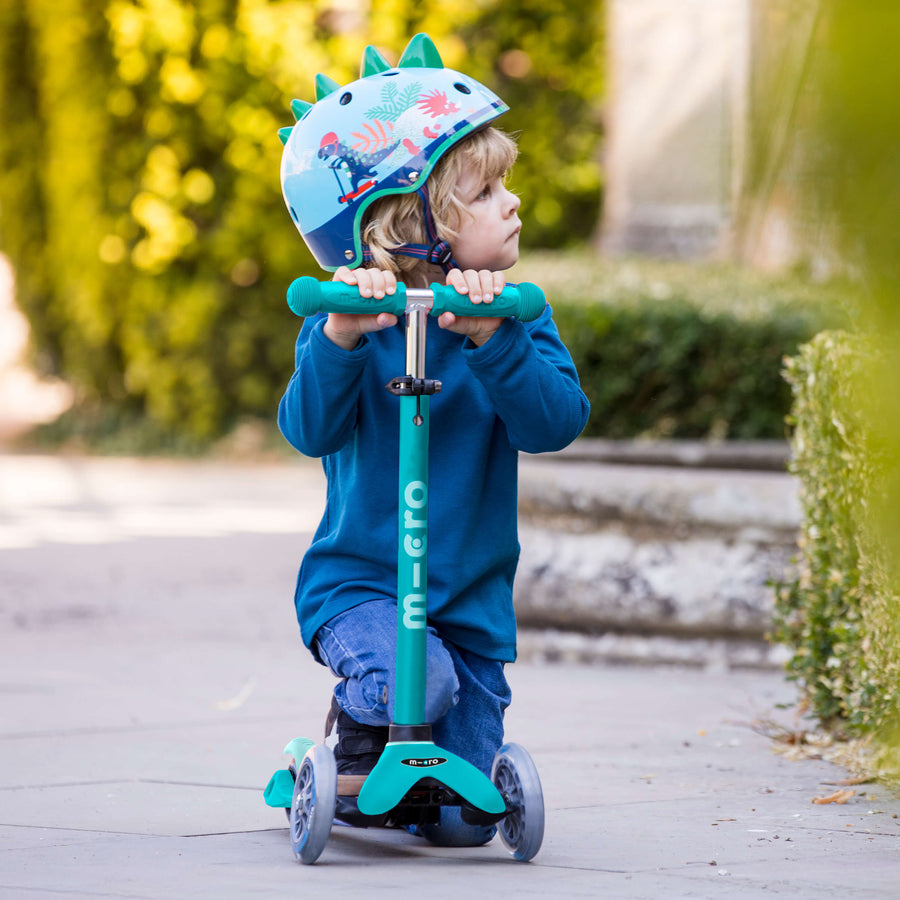
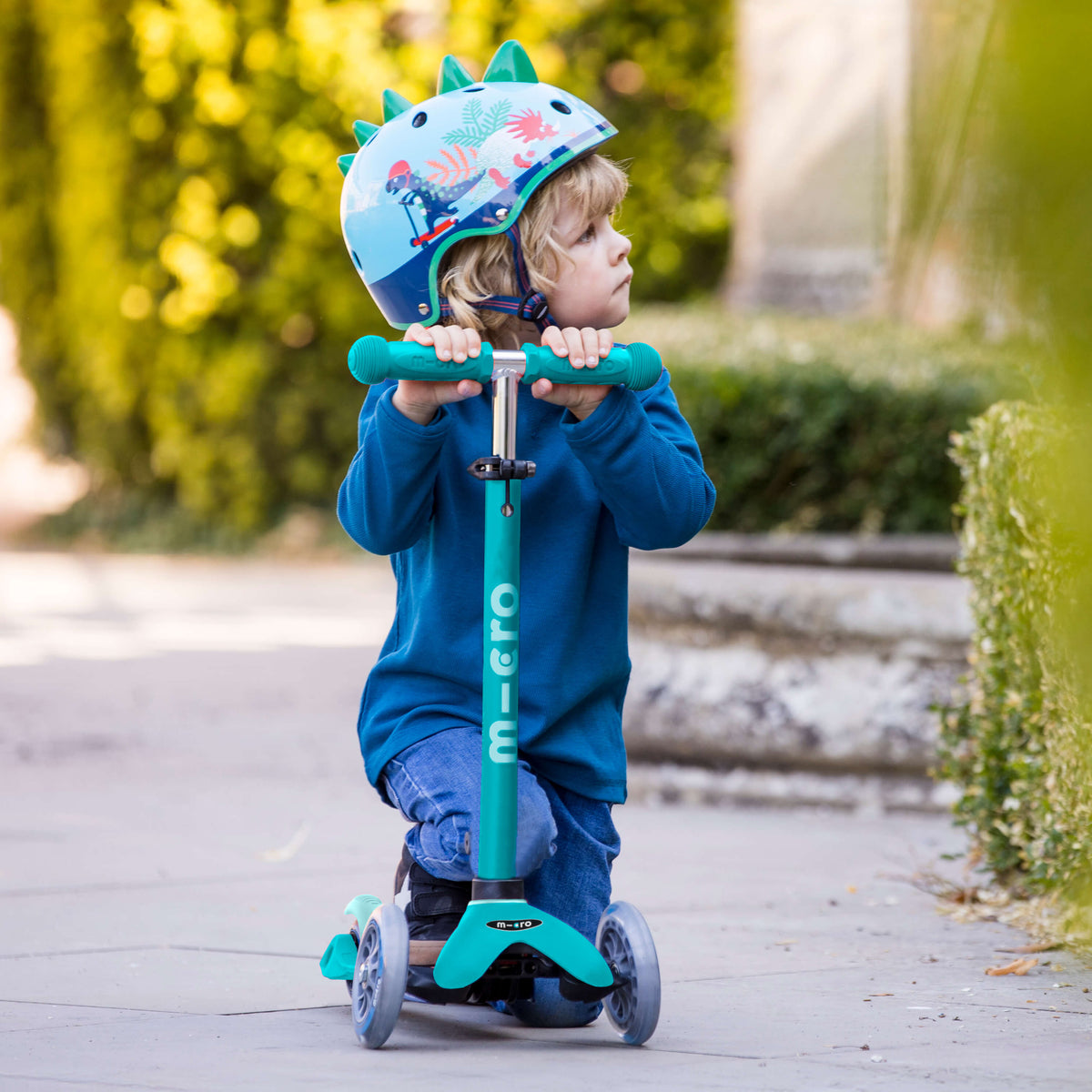
Micro Printed Helmet - Dino
The rear light doubles as the sizing dial, so it's quick to fit and they're easy to spot on dark afternoons. There's a reflective logo on the back too, and the squeeze buckle is easy for small fingers. Sizes from Extra Small (46 to 50cm).
£32.95

Scoot & Ride Printed Kids Helmet XXS-S - Leopard
A soft, light helmet for toddlers from around 1 to 3 years (45 to 51cm). It has an LED light on the back and a magnetic buckle that won't pinch. Also in Green Lines and Brown Lines.
£39.95

Prefer something plainer? The Micro Plain Helmet - Navy has the same rear light and reflective logo, and the Scoot & Ride Kids Helmet comes in lots of colours, including Forest and Ash to match the Highwaykick scooters.
Being seen on darker school runs
Now the clocks have gone back, a lot of school runs finish in the gloom. The Highway Code (Rule 3) suggests something bright or fluorescent when the daylight is poor, and something reflective once it's dark, because drivers can see reflective materials in their headlights up to three times as far away as non-reflective ones. A reflective strip on a coat or bag, a helmet with a rear light and a scooter with light-up wheels all help a small rider stand out.
Scooters, balance bikes and the kerb
Young children shouldn't be out on the pavement or road alone. When you're out together, the Highway Code (Rule 4) says to keep between them and the traffic and hold their hands firmly. With a scooter, that usually means a simple rule: scooters stop at every kerb and driveway, then hands are held to cross.
The Highway Code (Rule 7) also points out that many children can't yet judge how fast cars are going or how far away they are, and that children learn by example. So say the Green Cross Code out loud as you go: stop just before the kerb, look all around, listen, and cross when it's clear. Before long, they'll be the ones reminding you.
The best scooter for a 3 year old (and what comes next)
For most 2 and 3 year olds, a three-wheeled scooter is the easiest start, because they steer by leaning and it's stable from day one. Here's a quick rundown, and our which scooter for which age guide has more detail.
Micro Mini Micro Deluxe LED Scooter - Aqua
Our pick for a 2 or 3 year old. Lean to steer, light-up wheels that need no batteries, and a handlebar that grows with them. Ages 2 to 5.
£89.95

Micro Balance Bike Lite - Blue
At just 2.6kg, it's light enough for them to handle and for you to carry home. A lovely way to build balance before a pedal bike.
£79.95

Micro Maxi Micro Deluxe LED Scooter - Navy
The next step up once they've outgrown the Mini. Same lean to steer and light-up wheels, and it lasts right through primary school. Ages 5 to 12.
£144.95

Scoot & Ride Highwaykick 5 LED Scooter - Forest
Big, grippy wheels for bumpy pavements, light-up front wheels and a handlebar that adjusts at the press of a button. From 5 years right up to adults. Also in Ash.
£119.95

Quick checklist before you head out
- Helmet on, level and snug, straps in a V
- Something bright, or something reflective if it's getting dark
- Helmet light switched on, if it has one
- Scooter brake working and handlebar at the right height
- Stop at every kerb and driveway, hands held to cross
Quick answers
What size helmet does a 2 year old need?
Measure their head one or two finger widths above the eyebrows. Many 2 year olds are around 46 to 50cm, which fits the Micro Extra Small or a Scoot & Ride XXS-S, but always go by the tape measure rather than the age.
Can a 2 year old ride a scooter?
Many can, on a light three-wheeled scooter like the Mini Micro, with you close by. Start somewhere flat and quiet, like the park.
Can they use the same helmet for a scooter and a bike?
Usually, yes. Check the label: helmets tested to EN 1078, like our Micro helmets, are made for scooters, bikes and skates.
Shop all Micro scooters and balance bikes or the Scoot & Ride range, and stay safe out there this Road Safety Week.